The Complete Airbnb Cleaning Checklist Hosts Actually Use (2026)

For a short-term rental, cleaning is not just "making the place look nice." It is the system that protects your reviews, your calendar, your nightly rate, and honestly, your peace of mind as a host.
A guest may forget the color of your sofa. They may not remember the brand of coffee you left in the kitchen. But they will remember hair in the bathroom, crumbs under the toaster, a sticky remote, wrinkled bedding, or a missing towel when they are already tired from travel. Small things feel big when a guest walks into a property they paid for.
That is why the best hosts do not treat cleaning like a last-minute task. They treat it like an operating system. Every turnover follows the same order, the same room-by-room flow, the same restock check, the same damage check, and the same final staging pass. This is where an Airbnb cleaning checklist becomes more than a cleaning list. It becomes your quality control.
At Natural Cleaning Experts, we clean short-term rentals for hosts who cannot afford missed details between guests. A good turnover is fast, yes, but it also has to be repeatable. Same standard on Monday morning, same standard on Saturday during peak season, same standard when checkout is late and the next guest arrives at 4 p.m.
This guide walks through the vacation rental turnover checklist professional hosts actually use in 2026: room-by-room cleaning, timing, staging, restocking, photo reports, and the point where it makes more sense to hire a professional STR cleaning team.
Why Top Hosts Treat Cleaning Like a System
A hotel has departments, standards, inspection sheets, linen flow, supply closets, and managers. A short-term rental often has one owner, one cleaner, one calendar, and very little room for mistakes. That is exactly why the cleaning process needs structure.
The goal is not just to clean what looks dirty. The goal is to reset the property so every guest feels like they are the first person to stay there. That feeling is what leads to "spotless," "fresh," "exactly like the photos," and "we would stay again" in reviews.
A cleaning system also protects the host from emotional decision-making. Without a checklist, every turnover becomes a memory test. Did someone check the oven? Did the cleaner look inside the nightstand? Were the coffee pods refilled? Did anyone notice the stained pillowcase? Did the bathroom trash get replaced with a fresh liner? During a same-day turnover, these details are easy to miss.
A strong Airbnb cleaning between guests routine usually has five parts. The cleaner resets linens and laundry, cleans every room by zone, restocks guest supplies, stages the home back to listing-photo condition, and sends a photo report with anything damaged, missing, stained, or unusual. When this happens every single time, the host does not need to wonder what happened inside the property. They can see it.
That is the real value of a professional turnover. It is not only the mop, the spray bottle, and the vacuum. It is the reliability of the system behind them.
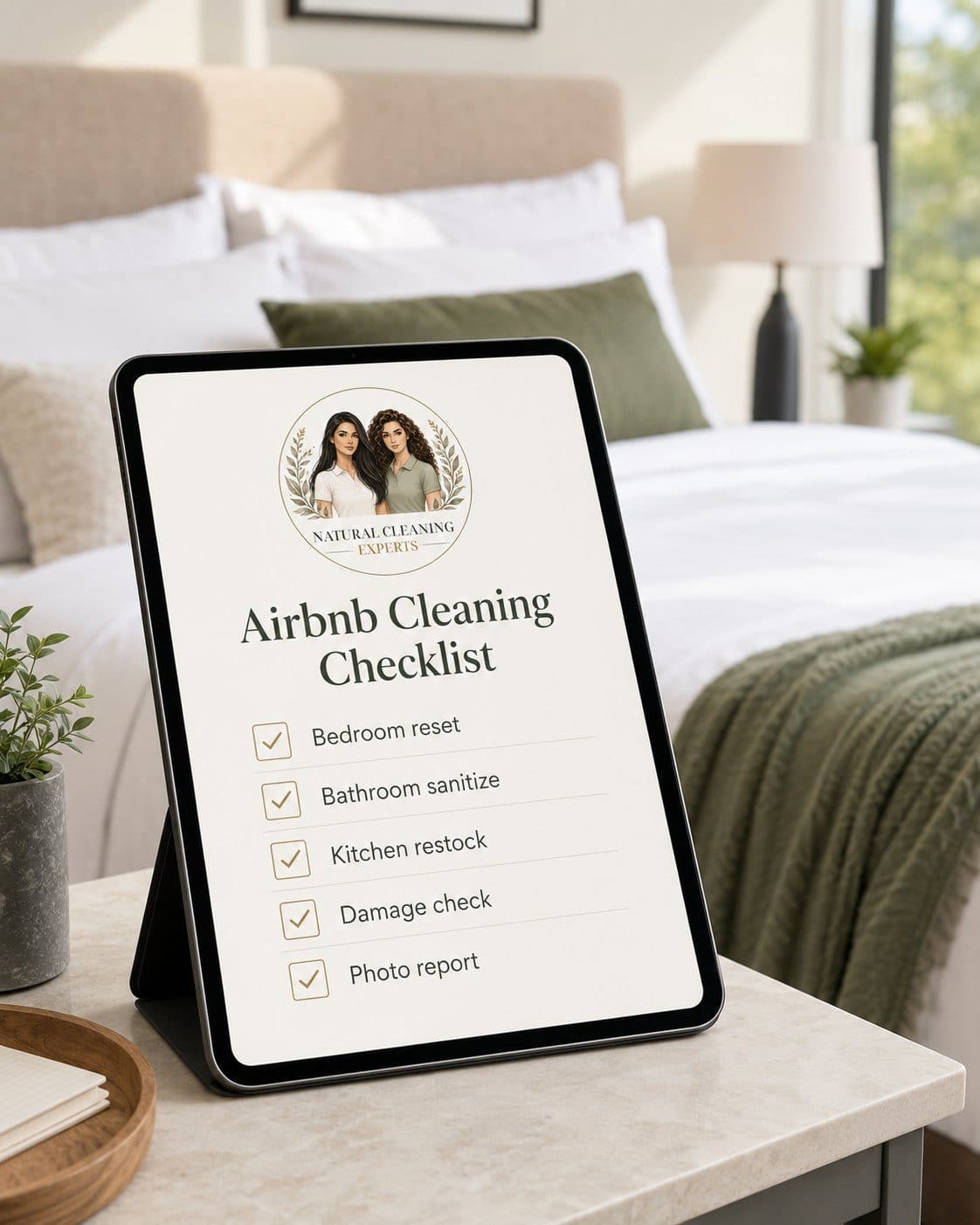
Bedroom Checklist With Timing
Bedrooms carry a lot of emotional weight in a short-term rental. Guests want the bed to feel fresh, calm, and untouched. If the bedroom feels careless, the whole stay starts to feel less clean.
For a standard bedroom, a professional turnover usually takes about 20 to 35 minutes, depending on the size of the room, the number of beds, the condition after checkout, and whether laundry is handled on-site. A primary bedroom with extra styling, multiple pillows, and a private closet may take longer.
The first step is stripping the bed completely. Sheets, pillowcases, duvet covers, used towels, and any extra guest-used linens should be removed and placed into the laundry flow immediately. The mattress protector should be checked for stains, hair, and damage. Pillows should be checked too, because makeup, oil, and sweat stains are easy to miss when everyone is rushing.
Then comes the surface reset. Nightstands, lamps, headboards, windowsills, dressers, closet shelves, mirrors, and baseboards need attention. Drawers should be opened and checked for left-behind items. Under the bed should be inspected, not just vacuumed around. Guests leave socks, toys, chargers, food wrappers, and sometimes things you really do not want the next guest to find.
Floors should be vacuumed carefully, including edges and corners. If the room has hard flooring, it should be mopped with the correct surface-safe solution. If there is a rug, it needs a visible pass, especially around the bed where hair and lint collect.
The bed should be remade tightly and consistently. The final look matters. Pillows should match the listing photos as closely as possible. Throws should be folded or placed with intention, not tossed. The goal is not to make the room look "decorated." The goal is to make it look ready.
Before leaving the room, the cleaner should do one last guest-eye check from the doorway. This is simple but powerful. Stand where the guest will stand. Look at the bed, floor, nightstands, lamps, windows, and closet. If something feels off in the first three seconds, fix it.
Bathroom Checklist With Timing
Bathrooms are where guests become the most critical. A living room can be cozy. A kitchen can be charming. But a bathroom has to feel absolutely clean. No hair, no streaks, no residue, no damp smell, no cloudy mirror, no questionable towel.
A standard bathroom usually takes 25 to 45 minutes during a turnover. A large primary bathroom, a bathroom with glass shower doors, or a property with heavy guest use may take longer.
The bathroom cleaning should start with removal. Trash out, used towels out, bath mats out, empty bottles out, and anything left by guests separated for the host's lost-and-found process. Then the toilet, sink, shower, tub, counters, faucets, mirrors, towel bars, shelves, and floors should be cleaned in a controlled order.
The shower needs special attention. Soap scum, hair near the drain, water spots on glass, shampoo rings on shelves, and residue around the faucet can ruin the guest's impression. If the property has glass shower doors, they should be cleaned and dried so they do not look cloudy in the light.
Toilets should be cleaned inside, outside, behind, around the base, and near the floor line. This is one of those areas where a quick wipe is not enough. Guests may not inspect every corner, but they can feel when a bathroom was rushed.
Mirrors and fixtures should be polished, not just sprayed. A streaky mirror can make the bathroom feel less clean even when everything else was done properly. Counters should be cleared, wiped, dried, and staged with only the approved guest items.
Restocking matters here too. Toilet paper, hand soap, body wash, shampoo, conditioner, tissues, trash liners, and towels should follow the host's standard. If your listing photos show two folded towels and a washcloth, that is what the guest should find. Consistency builds trust.
The final bathroom check should happen with the lights on. Look for hair on white surfaces, lint on towels, fingerprints on chrome, drops on the mirror, and anything wet that should be dry. Bathrooms should feel clean visually and physically.
Kitchen Checklist With Timing
The kitchen is one of the biggest reasons guests choose a vacation rental instead of a hotel. It is also one of the easiest places for hidden messes to survive a turnover.
A small kitchen may take 30 to 45 minutes. A larger kitchen, or one used heavily by a family or group, can take 60 minutes or more. If dishes were left dirty, the refrigerator is full of abandoned food, or the oven was used heavily, the timing changes quickly.
A good kitchen turnover starts with food and trash removal. The refrigerator should be checked for leftovers, spills, expired condiments, and sticky shelves. The freezer should be checked too. Guests often leave ice cream, bags of ice, frozen meals, or spills that become someone else's problem later.
Counters should be cleaned with the correct product for the surface. Granite, marble, quartz, butcher block, laminate, and stainless steel all need different care. A one-spray-fits-all approach is risky, especially in higher-end rentals. Stone countertops should never be cleaned with acidic products like vinegar or lemon juice — more on that in our guide to cleaning stone countertops the safe way.
Appliances need more than a quick front wipe. The microwave should be cleaned inside and out. The stovetop should be degreased and polished. The oven should be checked for spills, smoke residue, and food debris. The toaster should be emptied of crumbs. The coffee maker should be cleaned, checked, and staged. Guests notice these things because they use them.
Cabinet handles, drawer pulls, light switches, and appliance handles should be wiped because they are high-touch points. The sink should be scrubbed, rinsed, and polished. The garbage disposal should smell fresh. Trash and recycling should be removed, and bins should get a clean liner.
Dishes should be checked even if they look clean. This includes plates, cups, wine glasses, silverware, pans, cutting boards, and children's items if the rental provides them. One dirty glass in a cabinet can undo the feeling of a clean kitchen.
The final step is restocking and staging. Coffee pods, tea, paper towels, dish soap, dishwasher pods, sponges, trash bags, and basic supplies should be placed where guests expect them. Counters should look clean, open, and ready to use.
Living Room Checklist With Timing
The living room is where guests relax, watch TV, talk, snack, and often take their first "we made it" photo. It needs to feel comfortable and clean without looking overly staged.
A living room usually takes 20 to 40 minutes depending on the size, amount of decor, flooring, and guest use. Properties with sofa beds, games, children's toys, or lots of decorative items will need extra time.
Start with trash, dishes, and left-behind items. Check under cushions, under the sofa, behind side tables, inside baskets, and around entertainment centers. Remotes should be found, cleaned, and placed where guests expect them. If the remote is missing, that needs to go into the photo report immediately.
Soft surfaces matter. Sofas should be vacuumed, pillows fluffed, throws folded, and visible lint or hair removed. If the listing allows pets, this area needs even more attention. Pet hair on a sofa can quickly turn into a review issue.
Hard surfaces should be dusted and wiped. Coffee tables, side tables, shelves, lamps, TV stands, window ledges, and decor pieces should be reset. The TV screen should be checked for fingerprints, but cleaned only with the correct safe method.
Floors should be vacuumed and mopped as needed. Corners, rug edges, and the area under coffee tables are easy to miss. If guests moved furniture, the cleaner should return it to the correct layout.
Staging should match the listing photos. Pillows in the same general place. Throw blanket folded. Coffee table clear or styled according to the host's instructions. Curtains opened or closed depending on the desired arrival look. The room should feel ready without feeling artificial.
Entryway Checklist With Timing
The entryway sets the tone before the guest even reaches the kitchen or bedroom. It is also where dirt, sand, leaves, and luggage marks tend to show up first.
Most entryways take 10 to 20 minutes, but they should never be skipped. The door should be wiped around the handle and lock area. The threshold should be cleaned. Floors should be vacuumed or swept and then mopped if needed. Rugs should be shaken out or vacuumed. Any welcome mat should look intentional, not tired and full of debris.
If the property has a smart lock, key box, or entry instructions posted inside, the cleaner should visually check that everything is in place. If the host provides umbrellas, beach towels, guest slippers, luggage racks, or welcome cards, these should be straightened and restocked.
The entryway is also a smart place for a final smell check. If the property smells musty, smoky, damp, or overly perfumed at the door, the guest will notice. A clean rental should smell fresh and neutral, not covered up.
Staging the Property Like the Listing Photos
Cleaning gets the property sanitary. Staging makes it feel bookable again.

One of the biggest mistakes hosts make is assuming that if the property is clean, it is ready. But guests compare what they see in person to what they saw online. If the listing photos show a styled bed, folded towels, clear counters, and a calm living room, the turnover should recreate that experience as closely as possible.
Staging does not need to be complicated. It just needs to be consistent. Towels should be folded the same way. Pillows should be placed with intention. Curtains should be adjusted. Chairs should be pushed in. Rugs should be straight. Kitchen counters should be clear. Bathroom products should face forward. Outdoor cushions, if included, should be returned to their place.
This is especially important in markets like Boca Raton, where guests often expect a polished, vacation-ready arrival experience. If your rental is near the beach, near restaurants, or positioned as a comfortable Florida getaway, the details matter even more. A guest who books a beautiful listing wants to walk into the same feeling they saw in the photos.
For hosts in South Florida, our Boca Raton service area is built around this kind of turnover demand: fast resets, high guest expectations, and homes that need to look ready every time.
What to Check for Damage, and Why Photo Reports Matter
Every turnover should include a damage check. Not because every guest is careless, but because short-term rentals move quickly. If you do not catch damage right after checkout, it becomes harder to know when it happened and harder to document.
A professional cleaner should check linens, towels, mattresses, pillows, furniture, rugs, walls, appliances, kitchen items, bathroom fixtures, decor, remotes, windows, doors, and outdoor areas if they are part of the property.
Common issues include stained sheets, makeup on towels, broken glasses, missing utensils, damaged cookware, scratched pans, burned countertops, clogged drains, broken blinds, missing remotes, furniture moved or damaged, and signs of smoking or pets where they are not allowed.
Photo reports protect the host. They also protect the cleaning team. If something is broken, missing, stained, unsafe, or unusual, it should be photographed and sent before the next guest arrives. The host should not discover it from a review, and the next guest should not be the first person to report it.
A good photo report usually includes proof of completion and proof of issues. Completion photos show staged rooms, clean bathrooms, made beds, restocked supplies, and locked doors when required. Issue photos show damage, stains, low inventory, excessive mess, or anything that needs host approval.
This is one of the reasons our Airbnb Cleaning service includes a turnover mindset, not just standard house cleaning. A short-term rental needs a cleaner who understands guest standards, timing, inventory, and documentation.
Restock List for Vacation Rental Hosts
Restocking is where many hosts lose control. The property can be beautifully cleaned, but if there is no toilet paper, no coffee, no trash bags, or no hand soap, the guest experience still feels incomplete.
A strong restock system should be simple enough for every cleaner to follow. The host should decide the exact quantity for each stay, and the cleaner should report low inventory before it becomes an emergency.
For bathrooms, the restock list usually includes toilet paper, hand soap, body wash, shampoo, conditioner, tissues, trash liners, fresh towels, hand towels, washcloths, and bath mats.
For kitchens, it usually includes paper towels, dish soap, dishwasher pods, sponges, trash bags, coffee pods or ground coffee, tea, sugar, salt, pepper, cooking oil if provided, napkins, and clean dish towels.
For bedrooms, it may include extra sheets, extra pillowcases, spare blankets, laundry bags, hangers, and sometimes luggage rack placement.
For the laundry area: detergent, dryer sheets or wool dryer balls, stain remover, lint roller, and backup linens. For beach or Florida rentals, the list may also include beach towels, sunscreen policy cards, cooler checks, or outdoor towel baskets if these are part of the guest experience.
The restock list should not live only in someone's memory. It should be written, shared, and checked every turnover. If you want an STR cleaning checklist printable for your cleaner, this restock section should be one of the clearest parts of the document.
When to Hire a Professional Airbnb Cleaning Team
Many hosts start by cleaning their rental themselves. In the beginning, this can make sense. You learn the property, understand guest behavior, and see exactly how long turnovers take. But once bookings increase, cleaning becomes less about saving money and more about protecting income.
You should consider hiring a professional Airbnb cleaning team when you have same-day turnovers, multiple properties, frequent weekend bookings, remote management, high-end surfaces, larger homes, or reviews that mention cleanliness even once. One cleanliness complaint can hurt more than the cost of hiring help.
Professional STR cleaning is also worth it when you need calendar coordination. If your cleaner is manually tracking messages, screenshots, and changing checkout times, mistakes can happen. Calendar-synced turnovers reduce that risk. The cleaning team can see the booking flow, plan the turnover, and understand when the property needs to be guest-ready.
Cost depends on property size, layout, laundry needs, location, guest condition, frequency, and whether restocking or photo reports are included. Many professional cleaners price short-term rental turnovers by property instead of only by hour because the work is tied to a guest-ready result. Smaller apartments may cost much less than larger homes with multiple bathrooms, lots of linens, outdoor spaces, and same-day pressure.
As a general rule, hosts should not compare Airbnb cleaning directly to regular house cleaning. A home cleaning visit is about maintaining a lived-in home. A vacation rental turnover is about resetting a hospitality product before the next paying guest arrives. The standards, timing, and risk are different.
If your STR is booked consistently, your cleaner is not just an expense. They are part of your revenue protection.
FAQ
What should be included in an Airbnb cleaning checklist?
A complete Airbnb cleaning checklist should include room-by-room cleaning, linen changes, bathroom sanitation, kitchen reset, trash removal, floor care, dusting, staging, restocking, damage checks, and final photos. The best checklist also includes timing, supply quantities, and host-specific instructions.
How long does Airbnb cleaning between guests take?
A small studio may take 1.5 to 2.5 hours. A two-bedroom property may take 3 to 4 hours. A larger home can take much longer, especially with laundry, multiple bathrooms, outdoor spaces, or heavy guest use. Same-day turnovers should always include buffer time for unexpected issues.
What is the difference between regular cleaning and vacation rental turnover cleaning?
Regular cleaning focuses on maintaining a home. Vacation rental turnover cleaning focuses on preparing a property for the next guest. That means linens, staging, restocking, damage checks, guest-ready presentation, and often photo reports. It is closer to hospitality cleaning than standard residential cleaning.
Should hosts use a printable STR cleaning checklist?
Yes. A printable or shared digital checklist helps keep every turnover consistent. It is especially useful when more than one cleaner works on the property. The checklist should include each room, restock expectations, photo requirements, and any details that match the listing photos.
How often should an Airbnb get a deep clean?
Most active short-term rentals need deep cleaning on a schedule, not only when something looks dirty. Depending on booking volume, a deep clean may be needed monthly, quarterly, or seasonally. Deep cleaning should include baseboards, vents, under furniture, inside appliances, grout, windowsills, upholstery touchpoints, and areas that do not get fully detailed during a fast turnover.
Do professional Airbnb cleaners restock supplies?
Some do, and some do not. It depends on the service agreement. At Natural Cleaning Experts, restocking can be part of the turnover process when the host provides inventory and clear standards. Low supplies should be reported before the next guest arrives.
Why do photo reports matter for Airbnb hosts?
Photo reports give hosts proof that the turnover was completed and show any damage, missing items, stains, or supply issues. They are especially helpful for remote hosts and same-day turnovers. A photo report helps prevent surprises and gives the host documentation if a guest issue comes up later.
Calendar-synced turnovers with photo reports make hosting feel less chaotic and more controlled. If you want your short-term rental cleaned, staged, restocked, and documented between guests, explore our Airbnb Cleaning service, or schedule a visit to build a turnover plan around your property.
A home that feels as good
as it looks.
Our specialists arrive with surface-safe, plant-based formulas — so you never have to wonder what's being sprayed on your counters.
Get My Price