Why We Never Use Vinegar on Stone Countertops (And What We Use Instead)
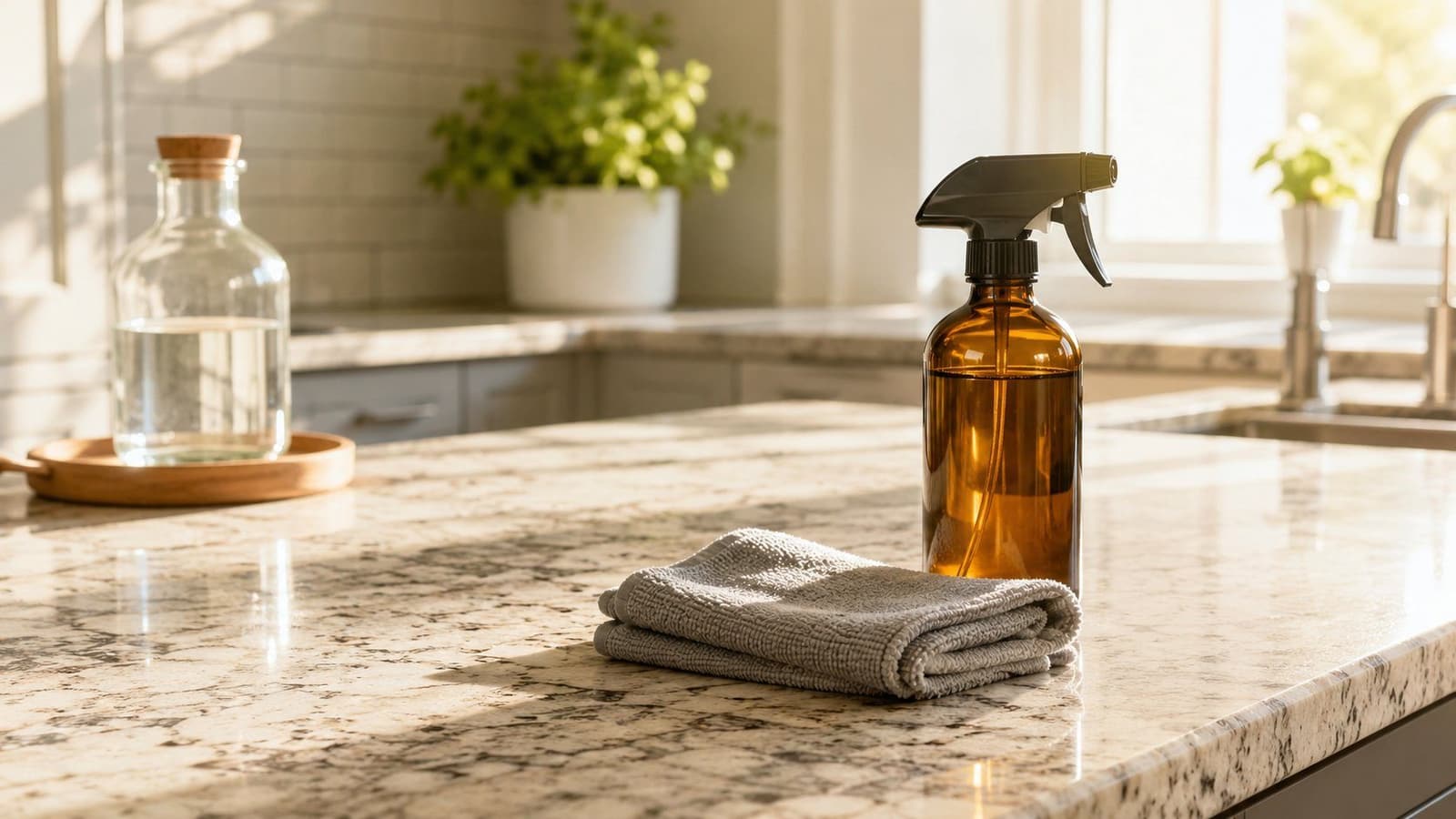
Vinegar has a strong reputation as a "natural cleaning miracle." You see it everywhere: kitchen tips, DIY cleaning videos, old-school home advice, and quick recipes for homemade sprays. And honestly, we understand why people reach for it. It is inexpensive, easy to find, and it can help with some types of buildup around the home.
But when it comes to stone countertops, vinegar is one of those natural solutions that can quietly cause damage over time.
At Natural Cleaning Experts, we clean homes across Texas and Florida, and we see a lot of beautiful kitchens with granite, marble, quartz, and other stone surfaces. These countertops are an investment. They can last for years and years, but only when they are cared for with the right products. That is why our team never uses vinegar on stone countertops, even when the client asks for "natural cleaning." Natural does not always mean stone-safe.
The real question homeowners ask us is simple: does vinegar damage granite? The answer is yes, it can. And the same concern applies to marble, grout, and some engineered stone surfaces too. The damage may not happen in one dramatic moment, but with repeated use, vinegar can dull the finish, weaken sealants, and leave the surface looking cloudy or etched.
Why Vinegar Is Often Seen as a "Natural Cleaning Solution"
Vinegar became popular in home cleaning because it is acidic. That acidity helps break down some mineral deposits, soap residue, and mild buildup. In the right places, it can be useful. For example, vinegar is sometimes used on glass, certain bathroom fixtures, or areas with hard water spots, though even there it needs to be used carefully.
The problem starts when the same logic gets applied to every surface in the home. A kitchen counter is not the same as a window. A granite island is not the same as a stainless steel sink. Stone surfaces react differently because they are porous, sealed, polished, and sometimes made with minerals or resins that do not respond well to acid.
Many homeowners choose vinegar because they are trying to avoid harsh chemicals. That makes sense. We feel the same way. Our company is built around safer, more thoughtful cleaning. But a safe cleaning routine is not only about avoiding toxic products. It is also about matching the formula to the material.
That is where pH matters.
What Acid Does to Granite, Marble, and Quartz, Explained Simply
Every cleaning product sits somewhere on the pH scale. Acidic products, like vinegar and lemon juice, are low pH. Alkaline products, like some degreasers, are high pH. Stone countertops usually need something closer to neutral, especially for regular cleaning.
Granite is a natural stone, and most granite countertops are sealed to help protect the surface from stains and moisture. Vinegar can slowly wear down that protective seal. Once the seal becomes weaker, the stone can absorb spills more easily. That means coffee, wine, oil, lemon juice, or tomato sauce can leave marks faster than they should.
So, does vinegar damage granite? It can, especially with repeated use. You may not notice it after one wipe, but over time the surface can lose its shine, feel less smooth, or become more vulnerable to staining.
Marble is even more sensitive. Marble contains calcium carbonate, which reacts badly with acid. When vinegar touches marble, it can create etching. Etching is not the same as a stain. A stain changes the color because something soaked in. Etching changes the surface itself. It can look like a dull spot, a cloudy ring, or a mark that does not go away even after cleaning.
Quartz countertops are a little different because they are engineered stone. They are made from quartz minerals combined with resins and pigments. Quartz is often marketed as low-maintenance, and it is, but that does not mean it should be cleaned with vinegar. Acidic cleaners can affect the resin, dull the finish, or damage the surface over time. When people ask us if vinegar is safe to clean quartz countertops, our answer is still no. There are better options.
Grout is another area people forget about. Even if your stone slab looks fine, vinegar can slowly affect grout lines around backsplashes, tile counters, or stone installations. Acid can weaken grout and make it more porous. Once grout becomes rough or absorbent, it gets dirty faster and becomes harder to clean naturally.
This is why we treat stone as a category that needs gentle, pH-balanced care. Not aggressive scrubbing, not acidic DIY sprays, and not "one cleaner for the whole house."
Signs Your Stone Countertop May Already Be Damaged
Stone damage is not always obvious right away. Many homeowners only notice it when the kitchen light hits the counter at a certain angle. Suddenly, there is a dull patch where the rest of the counter is shiny. Or there is a cloudy ring near the sink. Or the surface around the coffee station just does not look as polished as it used to.
One common sign is etching. It usually looks like a pale, dull, or cloudy mark on the surface. You may see it where lemon juice dripped, where a vinegar bottle sat, or where someone used a DIY cleaner too often. Etching is especially common on marble, but it can happen on other surfaces depending on the finish and seal.
Another sign is a loss of shine. If part of your countertop looks flat or faded compared to the rest, the finish may have been affected. This can happen when acidic products slowly break down the polish or protective layer.
You may also notice that the countertop stains more easily than before. If water no longer beads on the surface, or if spills seem to soak in faster, the seal may be worn down. This does not always mean the stone is ruined, but it does mean the surface needs more careful maintenance.
Rough texture is another clue. A countertop should feel smooth under your hand. If a section feels slightly gritty, uneven, or chalky, that area may have been etched or stripped.
And sometimes the sign is simply that the counter never looks clean, even right after wiping. That usually means the issue is not surface dirt anymore. It may be product residue, damage to the finish, or a weakened seal.
What We Use Instead: Our Stone-Safe Cleaning Method
When our specialists clean stone countertops, we use formulas designed for the surface. For our House Cleaning service, our team brings stone-safe products to every clean because we do not believe homeowners should have to worry about whether the wrong spray was used on an expensive countertop.
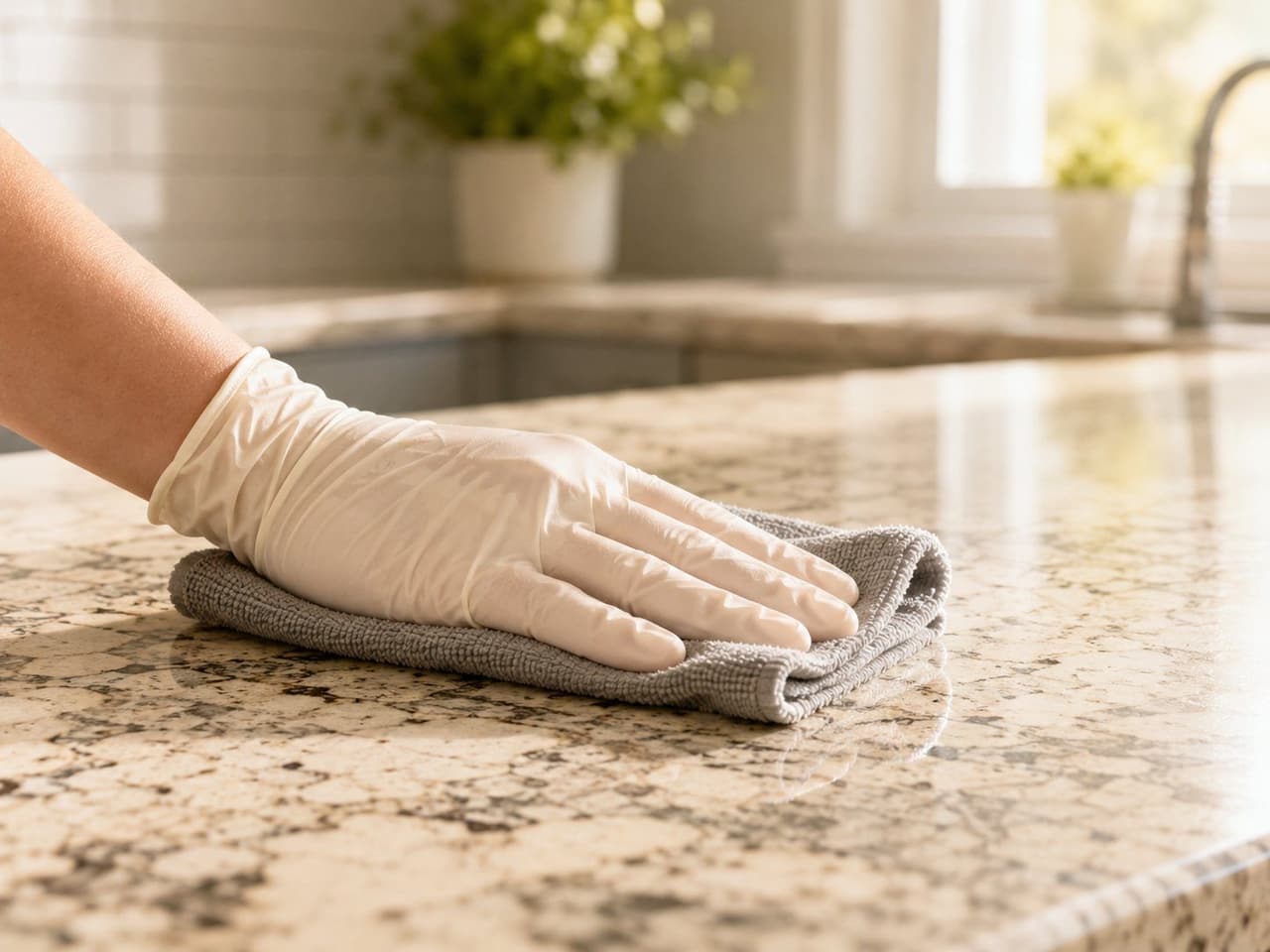
Our first step is always a gentle dry removal of crumbs, dust, and debris. This matters because even small particles can scratch if they are pushed around with a wet cloth. We do not rush straight into spraying and scrubbing. A careful first pass makes the rest of the clean safer.
Then we clean the countertop with a pH-neutral solution. A pH-neutral cleaner is gentle enough for sealed stone but still effective for everyday kitchen residue. It helps remove fingerprints, light grease, food marks, and general buildup without attacking the stone, the sealant, or the finish.
For granite, this is especially important. If you are wondering how to clean granite countertops naturally, the best answer is not vinegar. It is a plant-based or gentle pH-neutral cleaner, a soft microfiber cloth, and a method that removes residue without leaving the stone wet for too long.
For quartz, we use the same careful thinking. To clean quartz countertops safely, we avoid vinegar, lemon-based cleaners, abrasive powders, harsh degreasers, and anything that can dull the resin or finish. Quartz may be durable, but it still deserves a surface-safe formula.
After cleaning, we wipe with clean microfiber and dry the stone. Drying is not just for looks. It helps prevent water spots, streaking, and mineral marks, especially in homes with harder water.
For grout lines, especially around backsplashes or stone tile, we may use hydrogen peroxide when appropriate. Peroxide can help brighten and sanitize grout without the same acidic effect as vinegar. We still use it carefully, and we do not treat every grout line the same way. The age of the grout, the color, the seal, and the condition all matter.
This is also why our internal cleaning standard matters. We do not train our team to grab whatever "natural" product sounds good. We train them to clean by surface type, material, and risk. You can read more about our quality approach in The Standard.
Daily and Weekly Care for Stone Countertops
For daily care, the best habit is simple: wipe spills quickly and use a soft cloth with a stone-safe cleaner. If you cook often, especially with lemon, tomato, wine, coffee, or oils, do not let spills sit. Even sealed stone can become vulnerable if acidic or staining ingredients stay on the surface too long.
Avoid on stone: vinegar, lemon juice, bleach, ammonia, abrasive powders, and rough scrub pads. A sponge may seem harmless, but the wrong side of the sponge can create tiny scratches or dull spots, especially on polished surfaces.
A microfiber cloth is usually the safest tool for everyday cleaning. It picks up residue without being too aggressive. For sticky spots, let a pH-neutral cleaner sit briefly, then wipe gently. Scrubbing harder is not always better. On stone, patience is safer than pressure.
Weekly care can include a more detailed wipe-down around edges, seams, backsplashes, appliance corners, and the areas near sinks or cooktops. These are the places where buildup tends to hide. If your countertop is granite or another sealed natural stone, you can also pay attention to how water behaves on the surface. If water soaks in quickly instead of beading, it may be time to ask a stone professional about resealing.
Cutting boards, trivets, and coasters also help. They are not just for decoration. They protect the counter from knives, heat, oil, citrus, coffee rings, and everyday wear. A beautiful stone kitchen stays beautiful longer when the cleaning routine and the daily habits work together.
FAQ
Does vinegar damage granite?
Yes, vinegar can damage granite over time. Granite is usually sealed, and vinegar can weaken that seal with repeated use. Once the seal is affected, the countertop may become more likely to stain, dull, or absorb moisture. One accidental wipe may not ruin the stone, but vinegar should not be part of your regular granite cleaning routine.
Can I use vinegar on quartz countertops?
We do not recommend it. Quartz is engineered stone, and while it is durable, acidic cleaners can still affect the resin and finish. If your goal is to clean quartz countertops naturally, choose a pH-neutral, stone-safe cleaner instead of vinegar or lemon-based sprays.
How do I clean granite countertops naturally?
Use a plant-based or gentle pH-neutral cleaner with a soft microfiber cloth. Wipe the surface, remove residue, and dry it after cleaning. Avoid vinegar, lemon juice, bleach, ammonia, abrasive powders, and rough scrub pads. Natural cleaning is best when it is also surface-safe.
Is baking soda safe on stone countertops?
Baking soda is often suggested online, but it should be used carefully. It is mildly abrasive, and repeated scrubbing with baking soda can dull polished stone. On some stains, a baking soda poultice may be recommended by stone-care professionals, but it is not something we suggest using as an everyday cleaner.
How do I remove a lemon stain from stone?
A lemon mark on stone may actually be etching, not a stain. If the spot looks dull, cloudy, or lighter than the surrounding area, the acid may have affected the surface. Cleaning will not always remove etching because the surface itself has changed. For marble and other delicate stones, a stone restoration professional may be needed to polish or repair the area.
What is the best natural stone cleaner?
The best natural stone cleaner is pH-neutral, non-abrasive, and designed for granite, marble, quartz, or sealed stone surfaces. It should clean food residue and light grease without using acid. At Natural Cleaning Experts, our specialists carry stone-safe formulas to every clean, so your countertops are treated with the right product from the start.
Our specialists carry stone-safe formulas to every clean. If you want a home that feels fresh without risking your granite, marble, quartz, or grout — book your cleaning today.
A home that feels as good
as it looks.
Our specialists arrive with surface-safe, plant-based formulas — so you never have to wonder what's being sprayed on your counters.
Get My Price